By Raine — tattoo artist, fine artist, and myth-slayer.
Tattoos have existed for thousands of years. They’ve been sacred, stigmatized, royal, outlawed, cherished, misunderstood, and celebrated.
Yet somehow… a handful of outdated myths still cling to people’s minds like stubborn little ghosts.
1. “People with tattoos can’t donate blood.”
This myth is ancient. Like… dinosaur era ancient.
This myth originates from the 1970s-1990s, when studios weren’t required to use single-use needles, sterilization standards varied wildly and there was little to no oversight. Hepatitis outbreaks were common and often linked to tattoo parlors, so strict rules were created to protect blood supplies and people from bloodborne infections.
By the early 2000s-2010s the industry had changed. Single-use needles became the norm, infection rates dropped dramatically, regulations tightened and studios became licensed.
Reality:
You absolutely can donate blood once the standard waiting period has passed (3-6 months usually), in Estonia the waiting period is 4 months.
Many countries don’t even require waiting if the tattoo was done in a licensed studio.
Modern equipment is sterile and single-use, so nothing to fear.
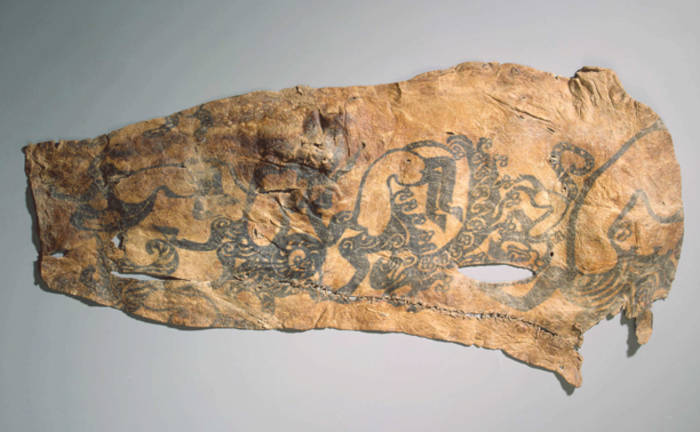
Ancient tattooed human skin from the Pazyryk culture, Iron Age Siberia (5th–3rd century BCE)
2. “Tattoos are unprofessional and limit job opportunities/Tattoos are only for criminals”
A relic from the past that has deep ties with psychology, classism, religion, rebellion and corporate culture.
Tattoos are ancient and date back even as fas as the iron age. Throughout history this ancient art form has seen it all, it’s been used by the elites, even kings (King George V of England, King Edward VII, Frederick IX of Denmark etc), to decorate and differenciate from the lower class.
It has been used ritualistically as a rite of passage in ancient tribes around the world.
It has been used by salve owners, by prisoners, by sailors, by outsiders. Tattooing has a rich history and is a practice that has gone through many interpretations and uses throughout history.
From 2000s-2020s this myth has been collapsing.
All kinds of people get tattoos these days – corporate workers, doctors, lawyers, designers, baristas, CEOs – everyone is tattooed. Tattoos are more and more considered a form of art and decoration.
Some of the most professional, accomplished people I’ve met are covered in beautiful tattoo art.
Professionalism is how you conduct yourself, not the presence of ink on your skin.
If a company still judges tattoos, that says something about them, not you.
3. “Tattoo artists are mean and judgmental.”
This is a stereotype most likely originating from media portrayal.
For the longest time tattoo industry was mostly male dominated , underground and gate kept.
Yes, there might be tattooers who are mean, just as there are people in any field that can be mean, but for the most part I would say that tattoo artists are some of the softest, most patient people you’ll ever meet (usually).
We work with pain, nerves, trauma, and insecurity every day.
We’ve heard every story. We’ve seen every body.
We’re here to support you, guide you, and make something beautiful with you.
Any artist who makes you feel small?
Wrong studio. Not the industry.
4. “Tattoos cause cancer or other illnesses.”
This myth lingers because tattooing used to be unregulated – early pigments contained heavy metals, hygiene standards were inconsistent, and hepatitis outbreaks in the 70s–90s scared the public. Add in dramatic media headlines and the discovery of pigment particles in lymph nodes (harmless, but shocking on scans), and people naturally assumed the worst. But modern tattooing is nothing like its past. Today’s professional studios use sterile, single-use needles, safe pigments, and strict hygiene protocols. There is no scientific evidence linking tattoos to cancer. The biggest risks now are simple: allergic reactions, irritation, or infection if aftercare is ignored. The idea that tattoos “cause illness” is a leftover ghost from another era, not a reflection of modern reality.
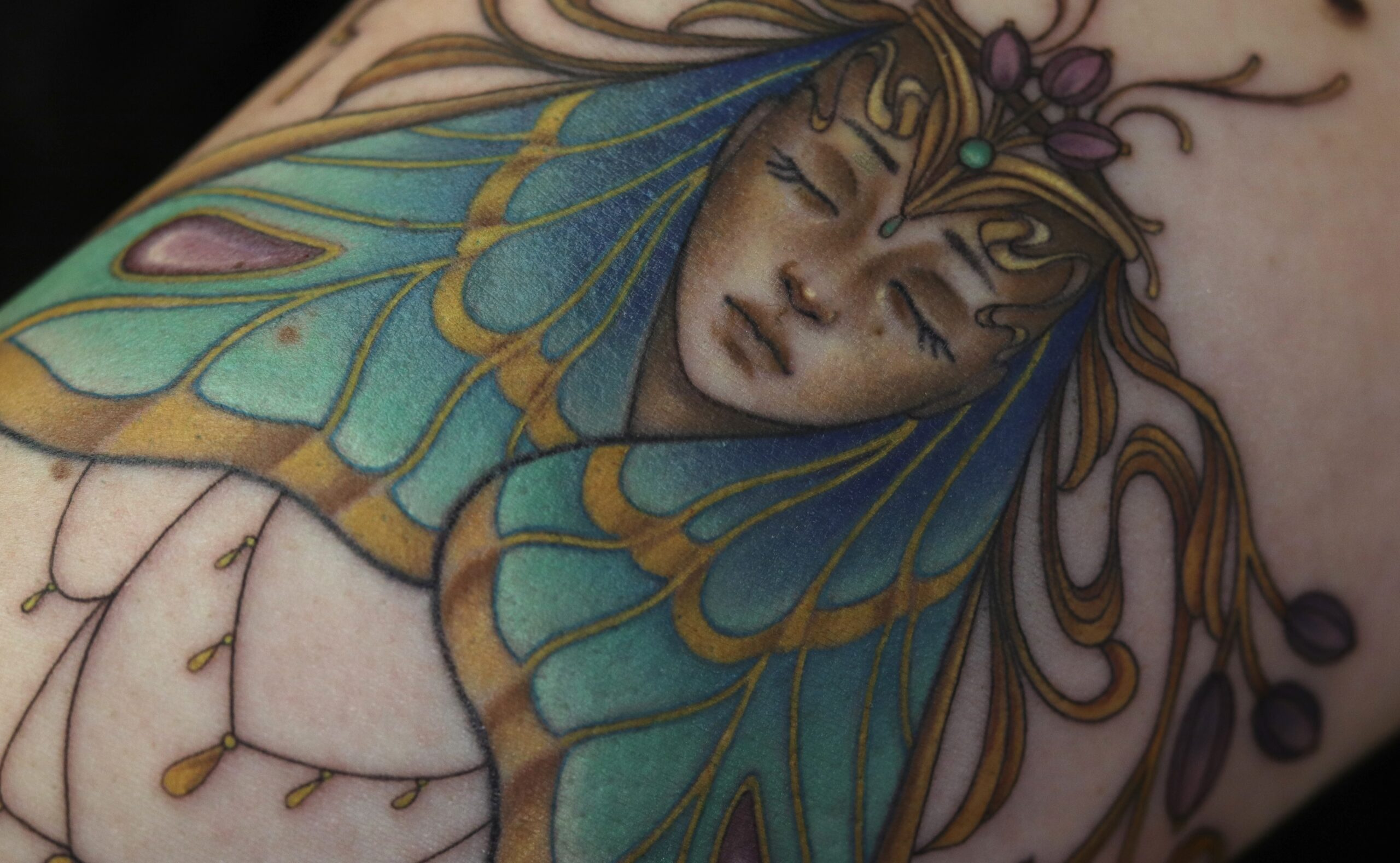
Color tattoo inspired by famous french jeweler Rene Lalique’s work. Done by Raine Kapp
5. “Color tattoos hurt more” / “White ink hurts more.”
Pain isn’t about pigment, it’s about where you’re being tattooed, how sensitive your skin is, the artist’s technique, and your personal pain threshold. White ink often feels sharper only because it’s added at the end of the session, when the skin is already irritated, not because the ink itself is “more painful.”
Color pieces can also seem more intense because they usually require larger areas of full saturation, while black and grey tattoos rely on negative space for contrast. More coverage = more sensation, but the pigment itself isn’t the culprit.
Color ≠ more pain.
The circumstances do.
6. “Tattoos fade and look bad over time.”
Tattoos age, just like your skin, and there’s beauty in that.
A well-executed tattoo, made with high-quality pigments and solid technique, will stay clear and beautiful for decades. That’s why choosing a professional artist matters. Good pigments, skilled application, and proper aftercare are what determine whether your tattoo still looks sharp in ten years or has turned into a blurry mess. And yes, heavy sun exposure will naturally fade any tattoo, the sun is the real enemy here, not the ink.
Tattoos age.
But so do we.
Gracefully — if we take care of what we love.
7. “Every tattoo has to be meaningful.”
Tattoos can be deeply meaningful, absolutely. Throughout history, tattooing has been used in rituals, rites of passage, and personal transformation. But tattoos can also be pure joy: a decoration, a funny moment shared with a friend, or a reminder not to take life so seriously.
Meaning is personal. You can get a profound piece one day and a silly little doodle the next. That’s the beauty of tattooing – you decide what your tattoos mean, if they mean anything at all.
Not every tattoo has to carry childhood trauma or a life lesson.
Sometimes a tattoo is meaningful simply because you want it.
Your joy is the reason, and the meaning itself.
Not everything sacred needs to be heavy.
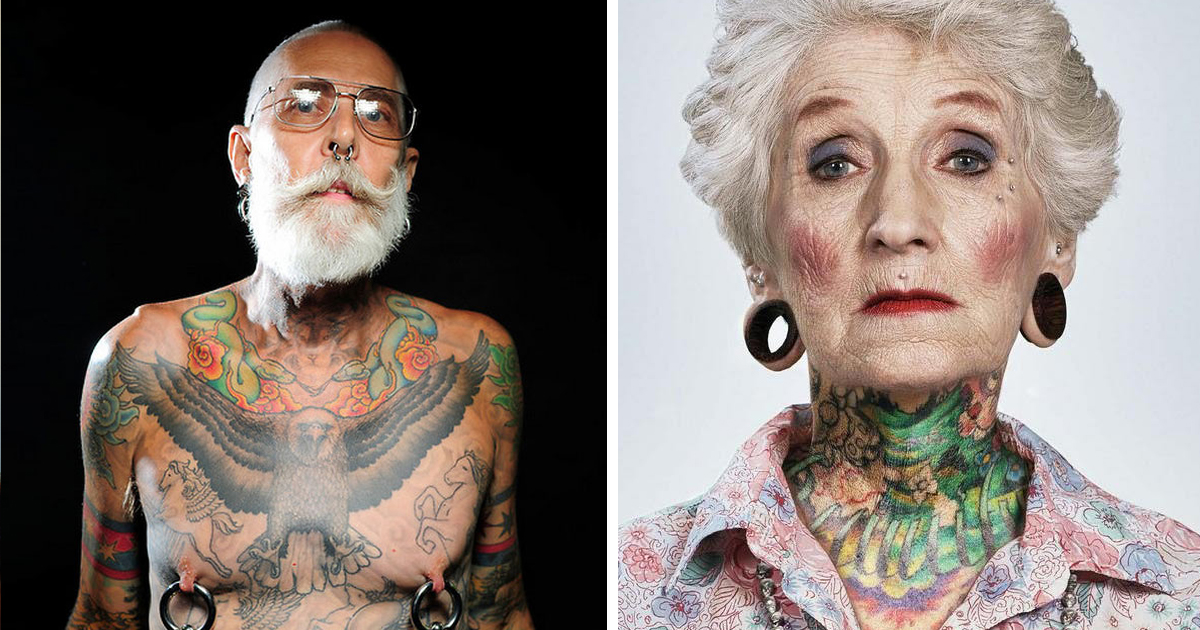
Art doesn’t discriminate. People of all ages get tattooed.
8. “You can’t get tattooed if you’re older.”
There’s a stubborn misconception among many middle-aged and older people that they “shouldn’t” get tattooed, or that they’ll be judged if they do. But art doesn’t ask for your age, your gender, your beliefs, or your place in life. Art is for everybody. And let’s be honest, if someone wants to judge you, they’ll find something to judge you for anyway – so to hell with their opinion.
What actually matters in tattooing is your skin condition, your health, and your aftercare, not the number on your birthday cake. I’ve tattooed people in their 50s, 60s, even 70s, and it’s always a beautiful experience. Older clients sit amazingly well because they know who they are and exactly what they want.
Ink doesn’t discriminate.
Neither do I.
9. “Tattoo studios reuse needles and supplies.”
This idea comes from how things used to be 20, 30, even 40 years ago, when supplies were harder to get and not always the best quality. But the tattoo industry has changed drastically. Today, no self-respecting artist would ever reuse supplies. Professional studios use sterile, single-use needles that are opened in front of you and thrown away immediately after the session. Anything else would be illegal, dangerous, and wildly unethical.
If you’re ever unsure, ask your artist to show you the packaging.
A good artist won’t hesitate, transparency is part of the craft.
10. “Tattoos are addictive.”
It’s true that many people who get one tattoo often return for more — but that doesn’t make it an addiction in any medical sense. The phrase is mostly a joke shared among tattoo enthusiasts because they enjoy the art and the lifestyle around it. Tattoos don’t create chemical dependency; they create connection.
You’re not addicted.
You’re inspired.
You’re transforming.
You’re reclaiming space on your own body.
People come back because the experience is empowering, meaningful, and expressive. Not because there’s some kind of ink withdrawal happening.
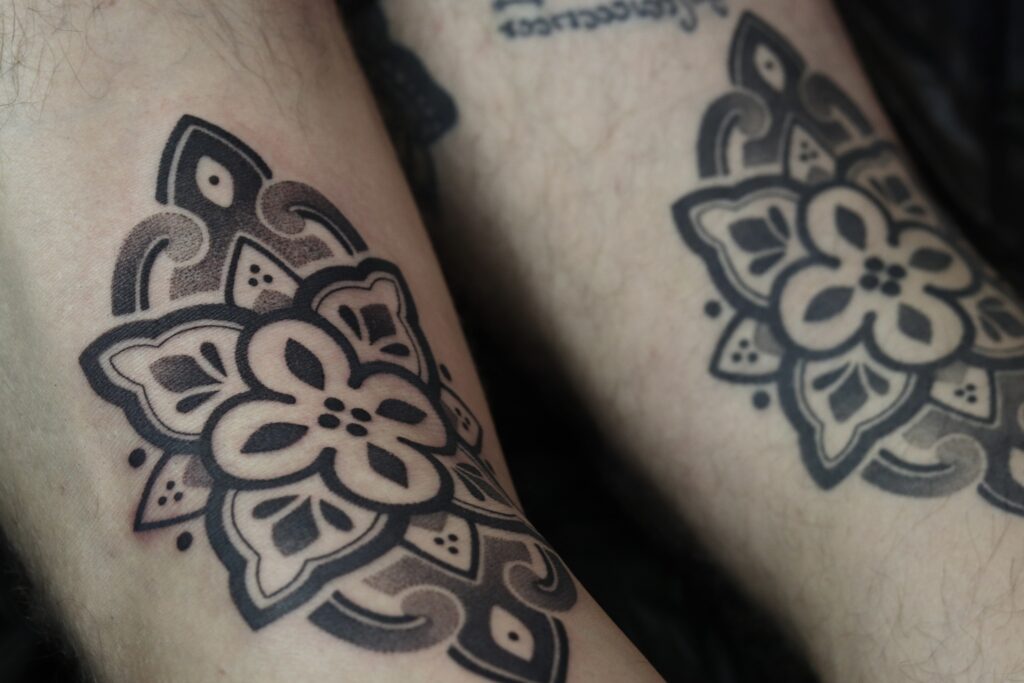
Ornamental knee ditch tattoos by Raine Kapp.
11. “Tattoos ruin your skin.”
Tattooing doesn’t ruin your skin, it transforms it. It decorates it. It turns your body into a living gallery that tells the story of you. Your skin heals, adapts, and becomes something new, and in that transformation, so do you. With proper technique and good aftercare, tattoos integrate beautifully with the body over time.
Your skin is not fragile.
It’s alive, and fully capable of holding beauty.
✨ Final Thoughts
Tattoos aren’t just about rebellion anymore.
They’re about identity, art, healing, expression, confidence, and connection.
People carry stories on their skin, and none of them should be held back by outdated myths from someone’s grandma’s church group.
If you ever have questions, uncertainties, or fears… ask your artist.
A good one will always answer with honesty, clarity, and care.
Thank you for reading!
Ready to ask a question or book a consultation?
Start here to read about how to choose the right artist for you!
Or book a consultation with me here.